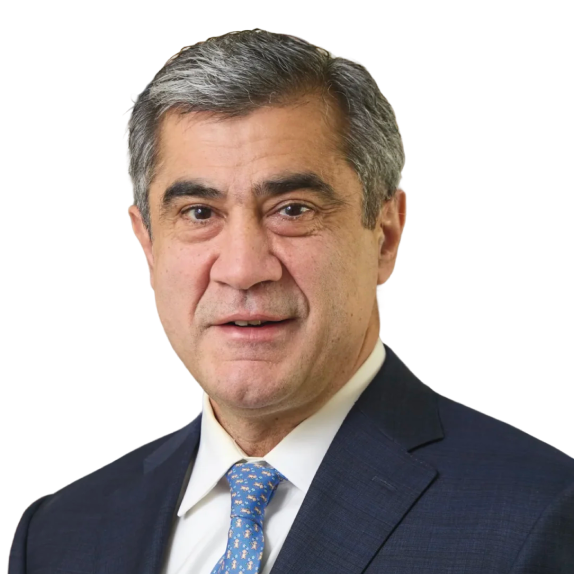
Murat Günel, MD
Lead PI
Neurosensing and Neuromodulation Co-Lead
Dr. Murat Günel, the Sterling Professor of Neurosurgery and Professor of Neurobiology and Genetics, was appointed Chair of the Department of Neurosurgery at Yale School of Medicine in 2014. He currently serves as Neurosurgeon-in-Chief of the Yale-New Haven Health System and Chair of the Yale Medicine Board. Dr. Günel is the Co-Director of the Yale Program on Neurogenetics and Director of the Yale Program in Brain Tumor Research. He received his medical degree from Istanbul University and completed his internship and neurosurgical residency at Yale-New Haven Hospital. His clinical expertise lies in complex cranial microneurosurgery.
Dr. Günel’s scientific work is guided by a unifying approach: to use mechanistic studies to understand disorders of brain development, vascular function, and tumor biology—and to translate those insights into neurosurgical strategies that restore neurological function. His research has defined the molecular and epigenetic architecture of neurodevelopmental disorders, including the discovery of WDR62 (Nature, 2010) and other gene mutations as a cause of lissencephaly and cortical malformations (Nature Genetics, 2011; Cell, 2014; Neuron, 2014), and more recently, the identification of mTOR pathway dysregulation as a convergent mechanism and potential therapeutic target in lissencephaly (Nature, 2025). He also contributed to foundational work identifying de novo mutations in autism spectrum disorder in collaboration with the State Lab (Nature, 2012). These insights now inform his leadership of the Yale site of a new initiative, which integrates imaging, electrophysiology, behavior, and genetics to develop noninvasive neuromodulatory and communication strategies for individuals with profound autism. This work represents the evolution of his research—from identifying mechanisms of dysfunction to developing tools that intervene directly at the level of neural circuits.
This translational model also underpins his work in brain tumors. In meningiomas, Dr. Günel’s group identified molecular subtypes defined by mutations in NF2, TRAF7, AKT1, SMO, and POLR2A, and demonstrated how epigenetic changes and enhancer reprogramming contribute to tumor progression (Science, 2013; Nature Genetics, 2016; Nature Communications, 2017, 2023). His team has characterized the clinical and anatomical correlates of these subtypes, enabling refined surgical planning and risk stratification. In gliomas, his research has described the malignant transformation of IDH1-mutant lower-grade gliomas into glioblastomas, driven by recurrent alterations in MYC, PTEN, and cell cycle regulators (Nature Genetics, 2016).
In parallel, his lab has advanced the understanding of intracranial aneurysms through both population-based and familial genetic studies. Genome-wide association studies identified common risk loci, including SOX17, CDKN2A/B, and EDNRA (Nature Genetics, 2008, 2010; PNAS, 2011), while whole-exome sequencing in extended pedigrees revealed rare deleterious mutations, including PPIL4, which regulates brain-specific angiogenesis (Nature Medicine, 2021). These findings continue to inform risk prediction and therapeutic development in cerebrovascular disease.
In 2015, Dr. Günel was elected to the National Academy of Medicine, the highest distinction in medical sciences. He is a member of the American Association of Neurological Surgeons (AANS) and the Congress of Neurological Surgeons (CNS), which jointly honored him in 2022 with the Ralph G. Dacey Medal for Outstanding Cerebrovascular Research. In 2021, he received the WINN Award from the Society of Neurological Surgeons for sustained contributions to neuroscience research. Dr. Günel previously served as Chair of the AANS/CNS Cerebrovascular Section and has been elected to the Society of Neurological Surgeons and the Academy of Neurological Surgeons. In 2020, he was recognized by the Turkish Academy of Arts and Sciences for Outstanding Achievement in Health and Life Sciences.