
Protein-Protein Interactions
The Protein-Protein Interactions Hub maps complex molecular interactions to build a pipeline that translates protein discoveries into new therapies.

Why Protein-Protein Interactions?
What is Known
Over 200 genes have been associated with autism to date, reflecting an incredibly diverse genetic landscape spanning a wide spectrum of fundamental biological functions. Researchers now have the technology to study these proteins and their complex interactions on a massive scale, which provides the essential roadmap needed to develop new, effective small-molecule therapies.
Challenge
Currently, there is limited insight into how variants in autism-related genes affect proteins, protein-protein interactions, and molecular networks.
Opportunity
The Protein-Protein Interactions Hub is utilizing existing tools to map protein complexes and develop mechanism-based small molecules that can modulate disrupted protein complexes to bolster therapeutic development.
Integration
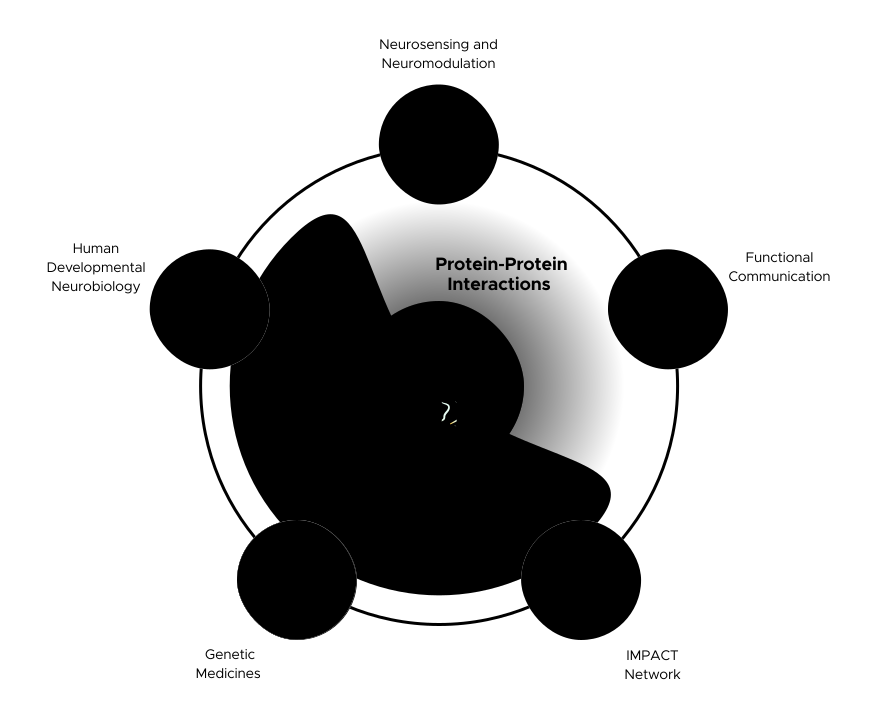
ARIA has been designed to remove silos and foster connections across disciplines. Discoveries and tools derived from the Protein-Protein Interactions Hub will feed into other ARIA Research Hubs, including:
- Genetic Medicines Hub
- Human Developmental Neurobiology Hub
- IMPACT Network
Funded Projects
The Protein-Protein Interactions Hub is one of six research hubs within ARIA’s ecosystem. Projects within the Protein-Protein Interaction Hub are conducted by collaborative, multidisciplinary research teams. These efforts will foster cross-disciplinary connections, fuel discovery, and accelerate the development of personalized therapies for autistic individuals and people with related neurodevelopmental conditions.
More information on funded projects will be available soon.